Aligning Blockchain Transaction Timelines with Jackpot Triggers Across Mobile Tournament Structures
Written by Casey Berger · May 24, 2026
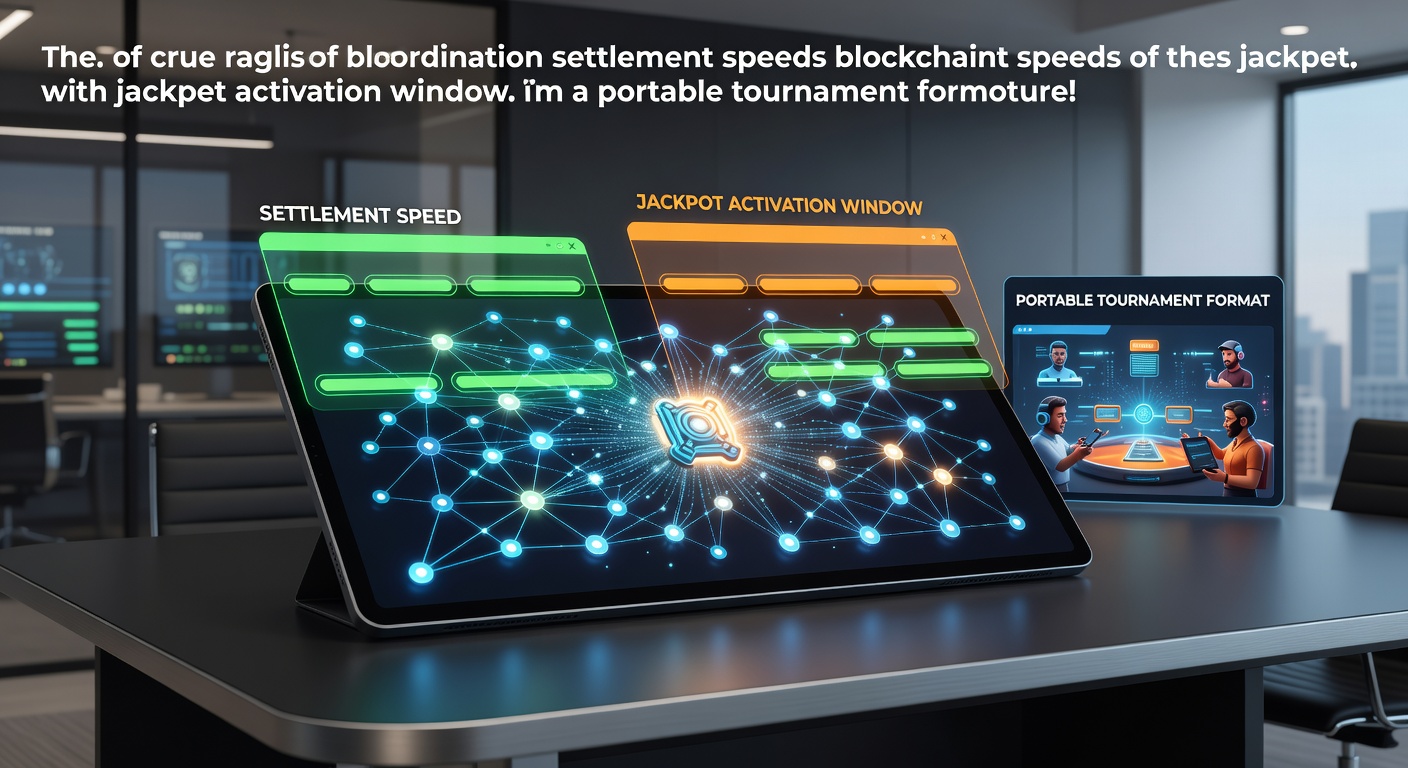
Aligning Blockchain Transaction Timelines with Jackpot Triggers Across Mobile Tournament Structures
Portable tournament formats in digital gaming environments rely on precise timing between blockchain confirmations and jackpot activation sequences, and operators coordinate these elements through synchronized protocols that account for network latency, consensus mechanisms, and device-specific processing delays. Research from the University of Nevada's gaming technology lab indicates that settlement speeds on public ledgers average between 3 and 15 seconds depending on the chain selected, while jackpot windows in mobile brackets often open for intervals as narrow as 2 to 8 seconds.
Those who manage tournament infrastructure note that mismatches between these timelines create failed claims or delayed payouts, which is why several platforms now deploy hybrid architectures combining layer-2 scaling solutions with localized trigger servers. Data from the New Jersey Division of Gaming Enforcement shows a 27 percent rise in mobile tournament participation during the first quarter of 2026, accompanied by increased scrutiny of settlement reliability metrics.
Blockchain Settlement Mechanics in Tournament Contexts
Blockchain networks handle transaction finality through distributed consensus, yet portable formats introduce variables such as variable signal strength and operating-system queuing that affect how quickly a wager registers on-chain. Observers at the Canadian Gaming Association report that operators mitigate these factors by routing entries through regional validator clusters, which reduces average confirmation time by up to 40 percent compared with global node distribution.
Jackpot activation windows function as predefined time slots during which accumulated prize pools become claimable, and these windows must align with on-chain proof of participation. When settlement lags behind the window close, systems automatically roll the entry into the next bracket or issue a queued payout, depending on house rules documented in the tournament smart contract.
Portable Tournament Architecture and Timing Synchronization
Mobile tournament brackets operate across multiple time zones and device types, requiring centralized orchestration servers to broadcast activation signals while simultaneously monitoring blockchain mempools for incoming settlements. Engineers at several major platforms utilize timestamp anchoring, a technique that records device-local time alongside blockchain block timestamps, to verify that entries arrived within acceptable variance thresholds.
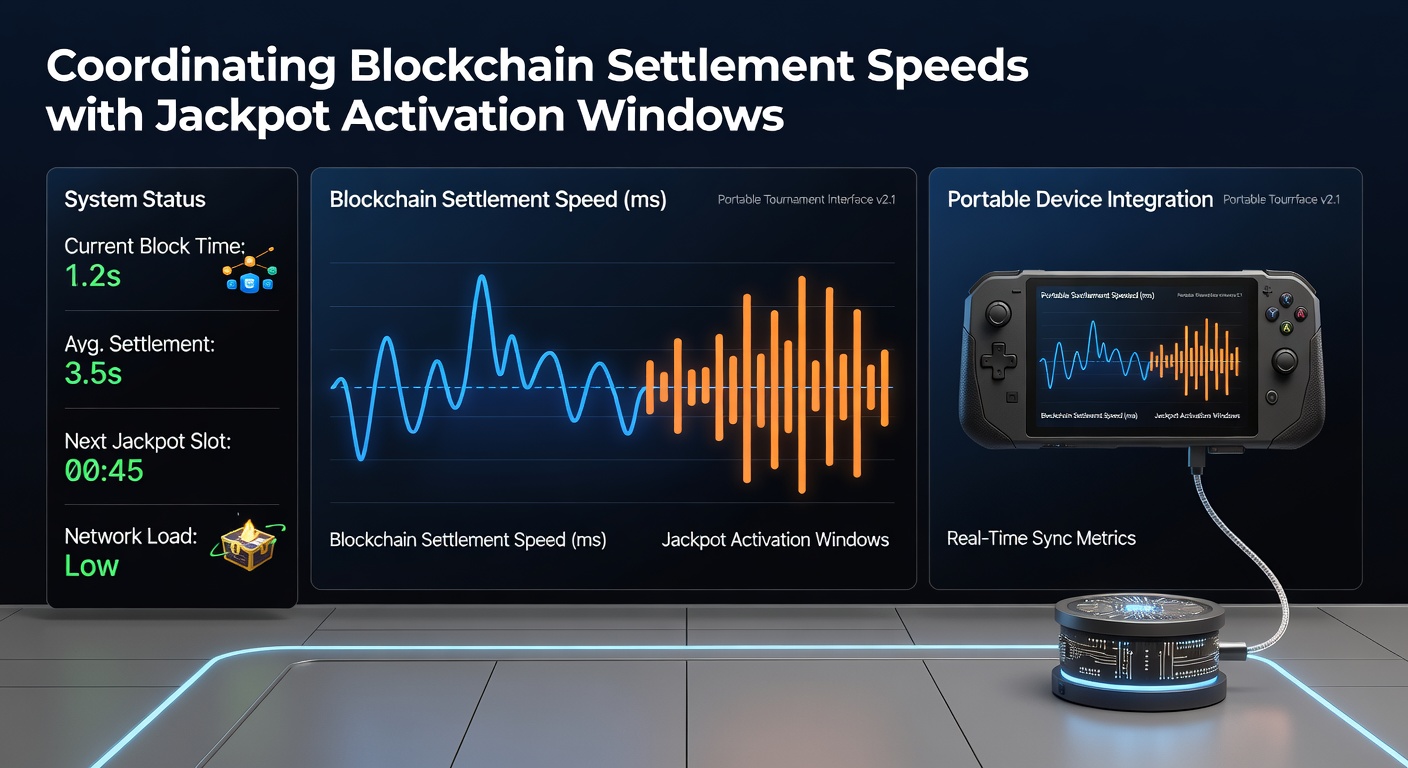
Studies published by the Australian Institute of Gambling Research highlight that tournaments using sub-second finality chains, such as certain permissioned networks, achieve 98.4 percent alignment rates between settlement and activation windows, whereas public chains with variable block times show alignment closer to 91 percent without additional buffering layers.
Regulatory and Technical Developments Observed in 2026
During May 2026, updates to the Illinois Gaming Board’s technical standards introduced mandatory reporting on blockchain-to-jackpot latency for any licensed mobile tournament offering, prompting operators to publish quarterly alignment statistics. Similar requirements have surfaced in discussions at the European Gaming and Betting Association, where working groups examine cross-border data synchronization standards.
One documented case involved a multi-state tournament series that experienced a three-second settlement delay on a public ledger, resulting in 142 entries missing the jackpot window; the operator resolved the claims by extending the subsequent bracket and publishing an on-chain correction log that external auditors later verified.
Implementation Approaches Across Platforms
Platforms address coordination through several documented methods, including pre-authorization buffers that hold entries in a pending state until settlement completes, predictive window expansion that lengthens jackpot intervals based on historical network congestion data, and fallback mechanisms that convert late settlements into equivalent bonus credits outside the jackpot pool. Figures from the Nevada Gaming Control Board indicate that operators employing at least two of these methods report fewer than 0.8 percent of entries affected by timing discrepancies.
Those who oversee live operations emphasize that device-level caching and edge computing nodes further compress the interval between user action and blockchain broadcast, while smart-contract oracles supply real-time network health indicators to the tournament engine.
Conclusion
Coordination between blockchain settlement speeds and jackpot activation windows in portable tournament formats continues to evolve through layered technical solutions and updated regulatory frameworks, with data from multiple jurisdictions showing measurable improvements in alignment accuracy as operators refine their synchronization protocols throughout 2026.