Charting how regional harvest festivals reshape bonus eligibility windows and table minimums in emerging mobile markets
Written by Morgan Zimmermann · Jun 23, 2026
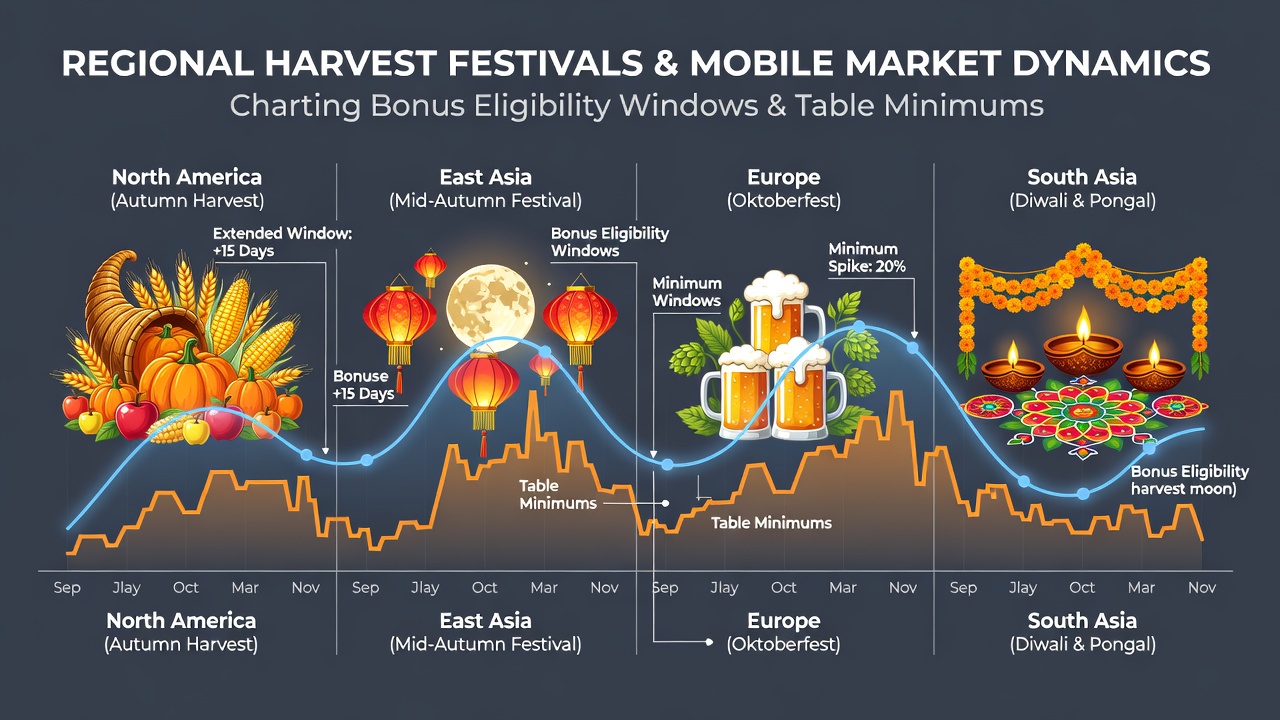
Charting how regional harvest festivals reshape bonus eligibility windows and table minimums in emerging mobile markets
Regional harvest festivals occur at staggered intervals throughout the calendar year and operators in emerging mobile markets adjust bonus structures accordingly, since these cultural events drive increased user engagement on portable platforms. Data from multiple jurisdictions shows that eligibility windows for no-deposit credits and deposit-match offers expand during festival periods, while table minimums on live dealer games drop to accommodate higher volumes of smaller-stake participants connecting via smartphones and tablets.
Festival calendars and market timing patterns
Harvest celebrations in Asia, Latin America, and parts of Africa align with different lunar or agricultural cycles, yet mobile gambling platforms track these dates to synchronize promotional calendars. In markets such as Brazil and Vietnam, operators extend bonus claim periods by several days before and after peak festival dates, allowing users additional time to meet wagering requirements without resetting eligibility counters. Figures released by iGaming Ontario indicate similar coordination occurs when operators target diaspora communities during comparable cultural windows.
Bonus window extensions in practice
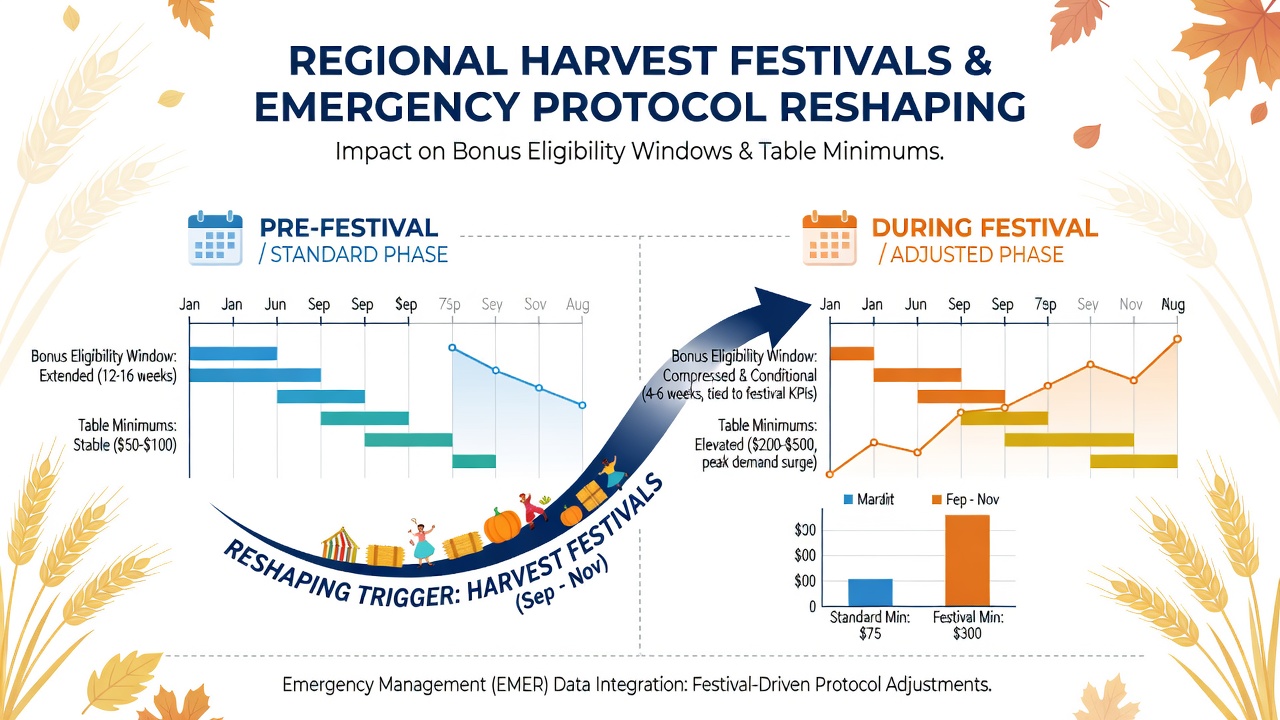
Eligibility windows for mobile-specific bonuses lengthen when harvest festivals increase session frequency and duration. Platforms lower the minimum deposit thresholds required to unlock matched funds, while extending the number of days users have to clear playthrough obligations. Research conducted by the Asia Pacific Association of Gaming Regulators documents that these adjustments correlate with measurable spikes in active accounts during festival weeks, particularly among users accessing games through localized language interfaces and regional payment rails.
Table minimum adjustments across live dealer formats
Live dealer table minimums decrease during festival periods to capture mobile traffic that would otherwise remain sidelined by higher entry points. Data indicates operators reduce minimum bets on blackjack, baccarat, and roulette variants by 30 to 50 percent for limited windows, while maintaining the same return-to-player percentages. These reductions appear most frequently in markets where smartphone penetration exceeds 70 percent and where festival-related social gatherings coincide with peak evening connectivity hours.
Payment processing coordination and regional examples
Payment rails tied to local banking holidays during harvest seasons receive priority processing to ensure bonus funds clear before eligibility clocks expire. In one documented case from a Southeast Asian operator, transaction confirmation timelines shortened by 12 hours around the Mid-Autumn Festival period, allowing users to activate credits that would have otherwise lapsed. A separate analysis published through the University of Nevada, Reno gaming research series found parallel patterns in Latin American markets during sugarcane harvest observances, where e-wallet approvals aligned with lowered table minimums produced sustained engagement stretches across multi-day festival intervals.
Regulatory updates and June 2026 developments
June 2026 brought revised reporting requirements in several emerging jurisdictions that require operators to disclose festival-timed adjustments to bonus windows and minimum bet structures. These disclosures feed into broader market impact assessments that track player protection metrics during high-engagement cultural periods. Regulators in multiple regions now request granular data on how eligibility extensions and minimum reductions affect session lengths and deposit patterns among mobile-only users.
Conclusion
Regional harvest festivals continue to serve as predictable markers that prompt measurable recalibrations in mobile bonus timing and table minimum settings. Operators rely on historical participation data to set these parameters, while regulators monitor outcomes through updated disclosure frameworks established by mid-2026. The resulting structures reflect coordinated responses to cultural calendars rather than static promotional schedules.