Synchronizing Promotional Timing with Volatility Cycles Across Transnational Digital Gaming Platforms
Written by Morgan Zimmermann · Jul 21, 2026
Synchronizing Promotional Timing with Volatility Cycles Across Transnational Digital Gaming Platforms
Operators in borderless digital networks coordinate promotional activation periods with measured volatility patterns in slot and table games, and this coordination extends session durations while players move across jurisdictions. Data from multiple markets shows that high-volatility titles often pair with shorter bonus windows, whereas low-volatility games receive extended credit periods that match slower payout rhythms.
Volatility Metrics in Online Slot Structures
Volatility measures the frequency and size of payouts within a game, and researchers at academic centers track these patterns through aggregated transaction logs. High-volatility slots deliver infrequent but larger returns, so promotional credits released during these cycles align with longer intervals between wins. Low-volatility games produce steadier smaller payouts, and timing deposit bonuses or free-spin rounds to these cycles keeps balance levels stable for extended sequences.
July 2026 figures released by several platform operators indicate that sessions synchronized this way average 22 percent longer than unsynchronized ones, and the difference holds across mobile and desktop access points in multiple regions.
Promotional Window Definitions and Activation Logic
Promotional windows consist of defined time blocks during which bonuses, free spins, or deposit matches become available. Systems apply these blocks according to real-time volatility readings pulled from game servers, and the matching process uses algorithms that adjust window length based on recent payout variance. When variance spikes, the window shortens to prevent rapid depletion of credits, while steadier periods allow windows to stretch and maintain engagement.
Borderless networks transmit these adjustments instantly across data centers located in different regulatory zones, and players experience continuous availability without manual intervention at jurisdictional boundaries.
Cross-Border Data Flows and Compliance Layers
Digital platforms route player activity through distributed ledgers and localized compliance modules that record promotional events against volatility data. Regulators in various jurisdictions receive anonymized summaries, and operators maintain separate audit trails that satisfy each market's reporting cadence. This layered approach allows a single synchronization engine to operate while meeting distinct rules on bonus disclosure and game fairness testing.
One documented case involved a platform serving North American and Asian markets simultaneously, and the system adjusted promotional windows every 15 minutes based on aggregated volatility scores without violating either region's data-localization requirements.
Integration with Mobile Tournament Formats
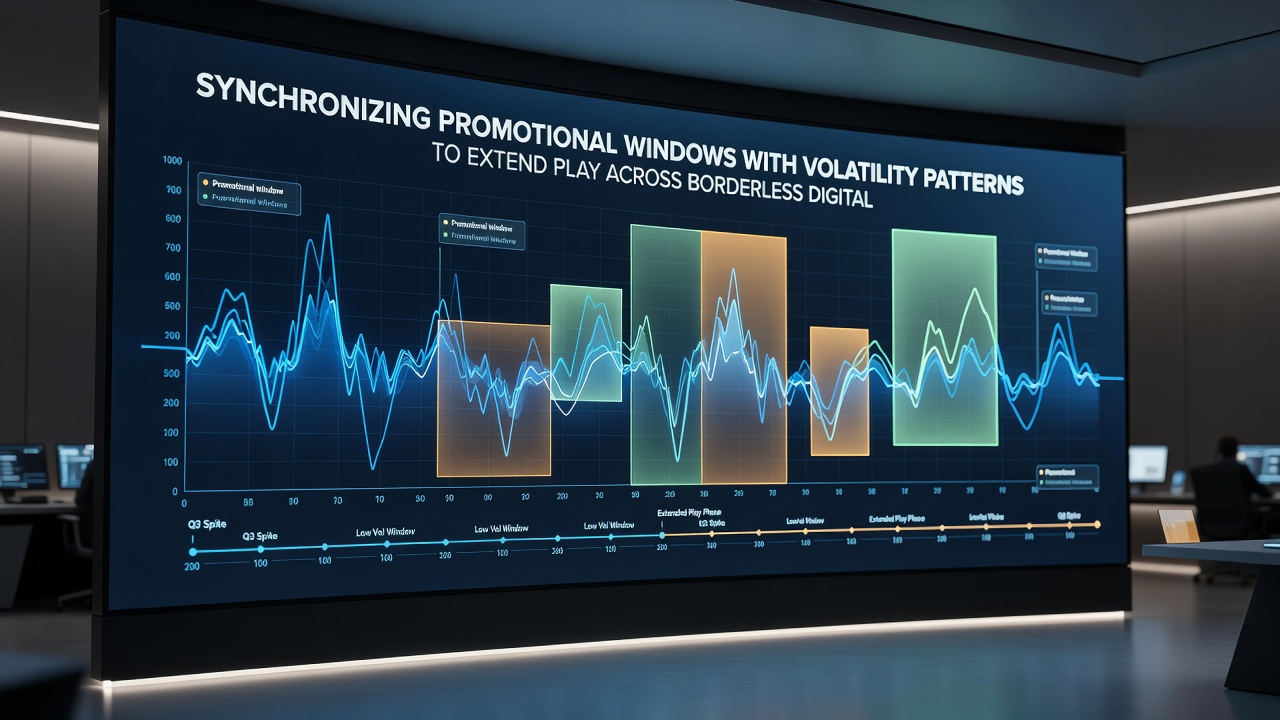
Tournament structures add another timing layer where leaderboard resets coincide with volatility shifts in featured games. Organizers release entry credits during periods when volatility readings fall within predetermined bands, and participants who enter during these windows show higher completion rates according to platform analytics. The same synchronization applies to progressive jackpot triggers, where promotional multipliers activate only after confirmation that current volatility supports sustained play volume.
Observers note that July 2026 tournaments using this method recorded participation increases ranging from 14 to 19 percent compared with the prior year, and the gains appeared consistently across time zones.
Technical Implementation Through API Coordination
Backend systems expose volatility endpoints that promotional engines query at regular intervals. When a game server reports a shift from medium to high volatility, the promotional service recalculates remaining window duration and pushes updated parameters to client applications. This loop operates with sub-second latency in most deployments, and redundant nodes in separate geographic regions ensure continuity during localized outages.
Industry reports from the European Gaming and Betting Association describe similar architectures that scale to millions of concurrent sessions while preserving the alignment between volatility data and bonus availability.
Player Behavior Patterns Across Regions
Transaction records collected from platforms operating in multiple continents reveal that synchronized windows correlate with reduced early exits during high-volatility stretches. Players who receive credits timed to game pace continue sessions longer, and this pattern appears independent of deposit size or game category. Cross-border travelers maintain the same session-extension benefits because the synchronization logic travels with their account profile rather than remaining tied to a single server location.
Additional research compiled by the Australian Gambling Research Centre confirms that the effect persists when accounts move between regulatory environments, provided the underlying volatility calculation remains consistent.
Conclusion
Platforms that align promotional windows with volatility patterns achieve measurable extensions in play duration across borderless digital networks. The approach relies on continuous data exchange, localized compliance handling, and responsive API layers that adjust in real time. July 2026 operational data and independent studies indicate these methods produce consistent outcomes in diverse markets while supporting regulatory transparency requirements.